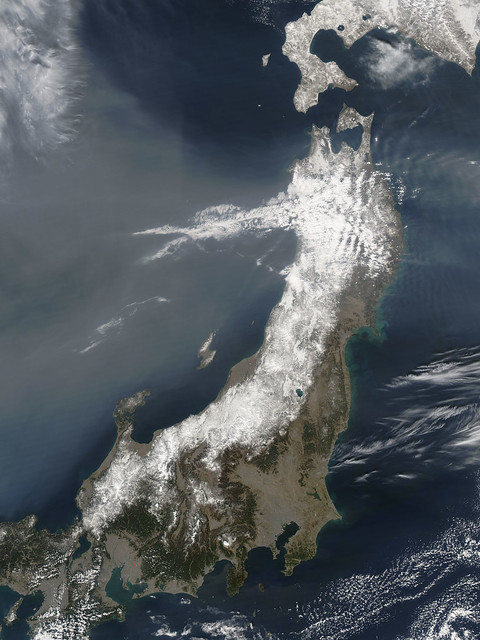
March 11, 2023, marked the 12th anniversary of the Great East Japan Earthquake. For many people, the disaster is remembered through images from north-eastern Japan — entire towns swallowed by a tsunami, the Fukushima nuclear crisis, and a nation stunned by loss on a historic scale.
But the earthquake did not stop at the disaster zone.
Its shock travelled far beyond the Tohoku coast, reaching factories, offices and households in distant parts of Japan. This is one such story — a memory of how the catastrophe altered the life of a worker in rural Shimane Prefecture, hundreds of kilometres from the epicentre.
In March 2011, Takashi Saito was 30 and working in trade administration at Mitsubishi Agricultural Machinery in a suburb of Matsue, the capital of Shimane Prefecture. Employed as a temporary staff member, he handled communications with overseas business partners in a role that required regular contact with partners abroad.
In Japan’s corporate culture, large companies have long favoured hiring new graduates over mid-career workers. For Saito, that made his position feel especially meaningful. Though he was not a regular employee, he was proud to work under the Three Diamonds of Mitsubishi.
March 11 was a Friday, and the day felt unusually mild for early spring. After lunch, Saito returned to his desk and resumed work. He was coordinating with overseas counterparts over the shipment of agricultural machinery parts needed to meet assembly deadlines. At the same time, as many workers do on a Friday afternoon, he was also thinking about the weekend ahead. There was the first faint hint of spring in the air.
Just before 3 p.m., a colleague seated beside him spoke in a low voice.
‘A big earthquake has hit Tohoku.’
Saito picked up his smartphone, opened a news alert, and quickly realised that something extraordinary was unfolding. Around him, work began to slow as people turned away from routine tasks and towards the news.
A little later, the same colleague pointed to his phone screen and said, ‘Look at this.’
It was a live NHK broadcast.
On the screen, an enormous tsunami was bearing down on the Sanriku coast in Miyagi Prefecture. The wave was black, immense and unlike anything they had ever seen. It surged inland, swallowing roads, cars and buildings — everything in its path. The scene looked unreal, almost cinematic. Yet it was happening in real time, and no one in the office could find words.
Then the telephone rang.
A colleague answered, and his voice suddenly rose.
‘The warehouses in Tagajo have been devastated — and one staff member is unaccounted for.’
Saito had heard language like that only in films and television dramas. Mitsubishi Agricultural Machinery operated major warehouses in Tagajo, Miyagi Prefecture, where tractors, combine harvesters and cultivators bound for North America and Europe were stored. Later, the missing employee was found safe. But in that moment, the disaster ceased to be a distant news story. It had entered the company directly.
As global media outlets such as CNN, the BBC and China’s CCTV began round-the-clock coverage, messages started arriving from overseas business partners in Italy, Thailand, China and South Korea, asking whether Saito was safe.
The epicentre, off the coast of Miyagi, was far from Shimane, on the Sea of Japan side of the country. But to clients unfamiliar with Japan’s geography, the disaster may have appeared to threaten the whole nation. Saito’s home in western Japan had suffered little direct damage, yet he spent much of the late afternoon replying to concerned emails and explaining the situation. His office was safe, he wrote, but the company’s facilities in Tagajo had been badly hit.
At some point, his iPhone displayed the official name of the disaster: the Great East Japan Earthquake.
Around 7 p.m., Saito left the office with a deep sense of unease about what lay ahead for Japan.
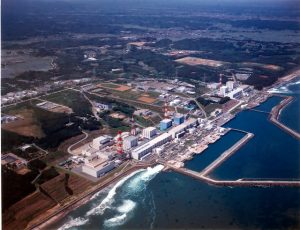
As he drove home through the cold night, NHK’s emergency radio coverage reported on the unfolding nuclear crisis in Fukushima, where tsunami damage had triggered radiation leaks, and on the still-unknown number of people feared dead. He went straight home without stopping anywhere.
When he turned on the television, the images had shifted again — this time to a burning industrial complex in Chiba, near Tokyo. Flames lit up the night sky. The scene looked, to him, like hell.
The next day, March 12, every television channel was filled with earthquake coverage. Again and again, footage showed cars and ships being swept away by the tsunami. CNN replayed the destruction throughout the day. The explosion at the Fukushima Daiichi nuclear power plant struck Saito with particular force. Shimane, too, had its own nuclear plant on the Sea of Japan coast. The danger did not feel abstract. Fukushima suddenly felt closer than ever.
His local newspaper, the San-in Chuo Shimpo, carried a large photograph of the tsunami with a stark headline. He could only pray that nothing like it would ever happen again.
On March 13, television news reported that many people in Tokyo had been unable to get home because of widespread disruption and blackouts. All major media outlets remained focused on the disaster. But by then, Saito had begun to pull away from television coverage. Instead, he listened to NHK radio. He did not want to be overwhelmed by watching the same scenes of catastrophe again and again. Even from far away, it was possible to feel consumed by the disaster.
Early Monday morning, an emergency meeting was held at his office.
The company told employees that the earthquake had disrupted its supply chain and forced a halt to production. The damage was no longer only emotional or symbolic. It was operational, financial and immediate.
‘A considerable loss is expected,’ someone said in a subdued voice.
After the meeting, Saito opened his email again. More messages of concern had arrived from abroad. One by one, he replied, telling business contacts that the headquarters in Shimane was functioning, but the warehouses in Tagajo had suffered severe damage.
The consequences would not end there.
In the aftermath of the Great East Japan Earthquake, Mitsubishi Agricultural Machinery posted a major deficit — one of the worst financial blows in its history. The company could no longer sustain its previous scale of operations, and many workers lost their jobs. Saito was among them.
For people outside Japan, the Great East Japan Earthquake is often understood through the places most visibly devastated: the Tohoku coastline, Fukushima, and the communities directly struck by tsunami and nuclear disaster. But the earthquake’s reach was wider than that. It rippled through supply chains, businesses and livelihoods across the country.
Saito’s life in Shimane was not overturned by collapsing buildings or floodwaters. No tsunami came to his town. Yet the disaster still changed the course of his life.
That, too, is part of the history of March 11, 2011.
The Great East Japan Earthquake did not affect only the places closest to the epicentre. It also reshaped lives in quieter, less visible ways, in places far from the sea, far from the rubble, and far from the television cameras.
In Shimane, one worker remembers that clearly.
(Edited by a writing instructor at Temple University Japan)