
Data note
This story reflects figures publicly available by late 2022. In Japan, fiscal years run from April to March. Where later disclosures help clarify outcomes, they are labelled as updates.
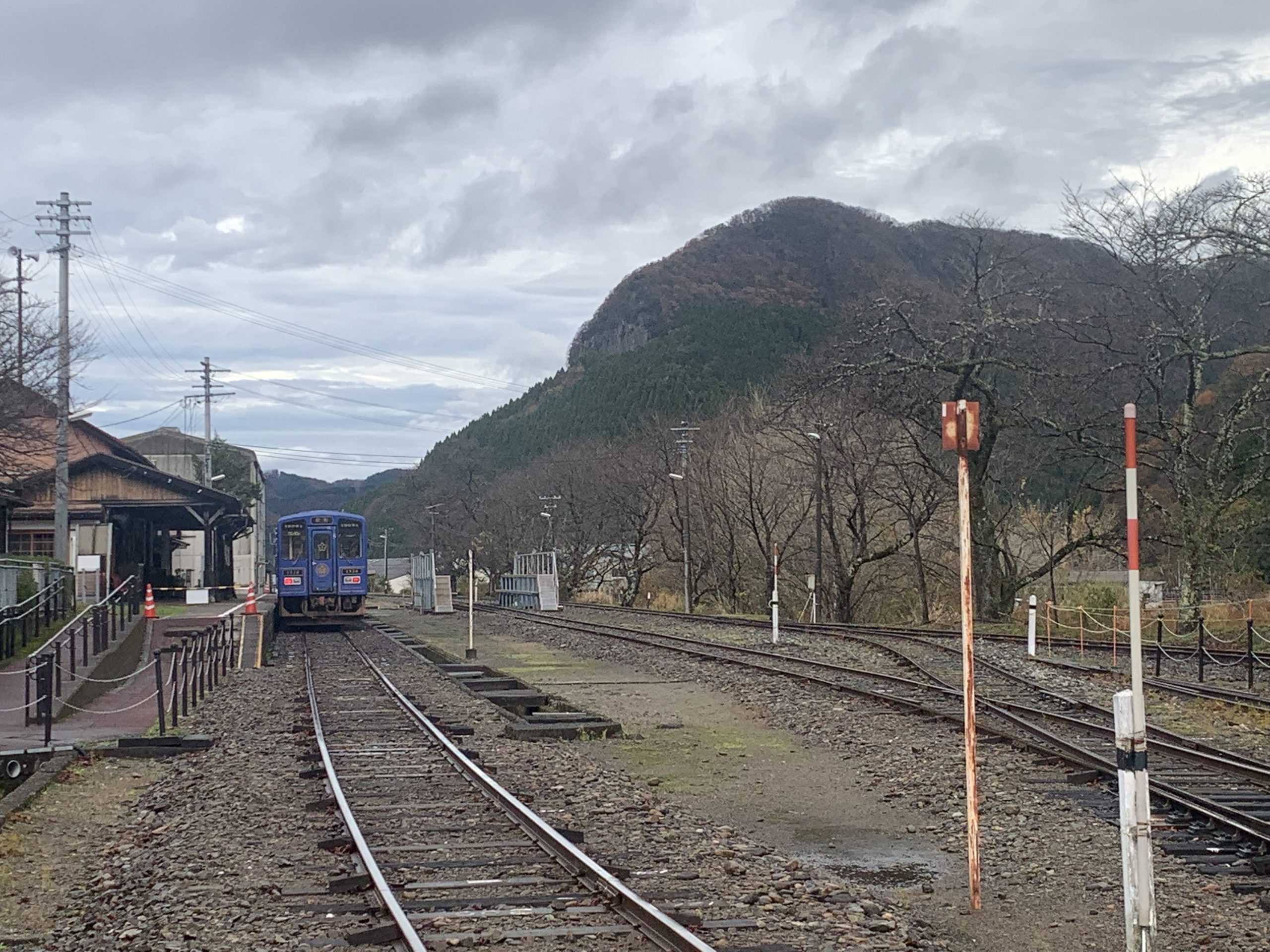
WAKASA, Tottori — The Wakasa Line is short, 19.2 kilometres from Koge to Wakasa, yet the question hanging over it is long-term. Can a rural railway survive by becoming more than a way to get around, without losing the very residents who need it to exist?
From Tokyo, Wakasa sits roughly 500 kilometres west in a straight line, and about 670 kilometres by road. The quickest route is usually by air: fly from Haneda Airport to Tottori Sand Dunes Conan Airport in about 1 hour and 15 to 20 minutes, then take the airport shuttle bus to JR Tottori Station in about 20 minutes. From JR Tottori Station, take the JR Inbi Line for about 15 minutes to Koge Station and transfer to Wakasa Railway. The rail leg from Tottori Station to Wakasa Station takes about an hour in total. Some through services run without a transfer; however, these are infrequent, so checking the timetable in advance is recommended.
Ridership has been sliding for years. A policy presentation on the line shows annual passenger traffic peaking at approximately 670,000 in fiscal 1999, then falling to roughly 427,000 by fiscal 2008. Money followed the same direction, as operating losses accumulated and public support thinned.
────────────────────────
THE TRAJECTORY IN NUMBERS
Ridership
FY1999: 670,000
FY2008: 427,000 (-36%)
Finances
Annual deficit: ¥40M
Support fund: ¥600M
Status (2008): Depleted
────────────────────────
The presentation reports operating losses of approximately 40 million yen per year and notes that a 600 million yen support fund, launched with 400 million yen from municipalities along the line and 200 million yen from a national transfer grant, was exhausted by the end of fiscal 2008.
Yet the railway has never been only a business. The same document explains why the line matters in daily life. Along the corridor, residents rely on larger centres, such as Tottori City, for advanced medical care, and the area is a heavy-snow region in which reliable winter bus service is not guaranteed. It also notes that Wakasa Railway rolling stock accounts for a significant share of local services on the JR Inbi Line between Tottori and Koge, tying the small line to a broader regional network.
That mix of public necessity and private fragility is familiar across Japan’s rural rail sector. What is worth examining in Wakasa is not whether it faces decline, but how it has sought to adapt — and what that adaptation can realistically afford.
The playbook and where Wakasa fits
In broad strokes, Wakasa Railway has drawn on a playbook that many struggling local operators now share. One part is tourism built on nostalgia: short trips are transformed into curated experiences, in which design, rolling stock, and scenery become the product as much as transport.
Another part is non-rail revenue, often powered by fan communities. Some lines have survived less by fares than by what supporters buy — packaged foods, souvenirs, collaboration goods — and by how effectively those purchases are translated into cash flow that keeps trains running.
Against that landscape, Wakasa’s strategy is not a wild outlier. It is, in many ways, a clear example of how rural rail in Japan is trying to defend itself — not by competing with cars on convenience, but by turning reasons to visit into repeatable support.
In Chiba, for example, Isumi Railway has marketed restaurant trains and retro Japanese National Railways diesel cars such as the Kiha 28 as signature attractions, turning a ride into an experience that can command a premium price.
Another comparison comes from Choshi Electric Railway, also in Chiba. Long regarded as a symbol of local-line struggle, it has pushed side businesses such as wet rice crackers so hard that its non-rail sales have grown to hundreds of millions of yen annually, far beyond what ticket revenue alone can cover. A 2023 business report put side-business sales at 390 million yen in the year ending March 2021, 450 million yen in the year ending March 2022, and 530 million yen in the year ending March 2023. It also noted that the railway operation continues to incur a loss of approximately 1.2 billion yen per year, underscoring the difficulty of earning a profit from fares alone.
In an earlier interview, Choshi Dentetsu’s president described the shift bluntly, stating that the company had effectively become a food business because the railway side was in the red.
What makes Wakasa distinctive is the way it has anchored that playbook to two powerful assets: a cultural-heritage framing rooted in the terminus, and a manufacturer-linked fandom that turns a station into a pilgrimage site.
The line as cultural heritage
Years before motorcycles entered the narrative, the railway leaned into a different form of value: history. The 2009 presentation advocates treating stations and facilities as tourism resources and even argues that the railway itself can be regarded as cultural heritage. It also notes that, by linking preservation and tourism, the area attracted thousands of visitors annually.
That framing matters because it changes the argument. The line is no longer defended solely as a transport route. It is defended as an identity and a place-making practice, something a town can lose permanently.
It also helps explain why residents have been repeatedly asked to participate beyond taxes. The same presentation documents local movements around the railway, including volunteer-led restoration and preservation activities at Wakasa Station, which, over time, have become a symbol that draws visitors.
Hayabusa Station and the power of a name
If Wakasa’s heritage is a slow-burn asset, Hayabusa Station is the lightning strike.
Hayabusa is the name of Suzuki’s flagship motorcycle, and the coincidence has grown into an annual gathering that brings riders to the Wakasa Line. In its official event report for the 2022 festival, Suzuki describes how company staff sent off riders and notes that about 1,500 bikes shared the day’s experience before heading back out on the road.
The scale fluctuates, and that is the point. In 2023, following pandemic disruptions, a motorcycle media report stated that the festival drew around 2,300 bikes and 2,600 people and quoted the organising chair greeting participants with a loud “Welcome home.” The numbers show momentum, but they also highlight a structural limitation: a single annual event cannot, by itself, replace daily ridership.
A credible story must accommodate that tension. The Hayabusa brand can attract visitors, but the railway still needs reasons for visitors to come on ordinary weekends, and it still needs residents not to be priced out, crowded out, or inconvenienced by tourism-first scheduling.
This is where a real on-the-ground interview becomes invaluable. One company voice already frames the stakes. In an interview for this story, Masahiko Yabe, a senior representative manager, argued that “a shared vision that benefits not only our company but also the local government, businesses and residents is essential,” adding, “If the railway disappears, Wakasa town disappears.”
A souvenir economy and what it can realistically fund
Wakasa’s latest effort to turn affection into revenue takes the form of a rural railway staple: merchandise that doubles as support.
In November 2022, the San-in Chuo Shimpo reported on Wakasa Railway Curry, a 250-gram retort curry priced at 2,160 yen, developed by a local butcher. The report states that approximately 120 grams of the pack are beef, with a local persimmon purée used as a hidden ingredient. It explains that the box is designed to resemble the line’s retro cars, complete with parts that allow buyers to connect and display the boxes after eating.
As a product, it is clever. As a funding mechanism, it needs context.
By late October 2022, about 500 boxes had sold, with a target of 2,500. If the target is met, gross sales would be 5.4 million yen. Even if every yen were profit, that figure would still be small relative to the scale of rail deficits reported in public documents, which are around 40 million yen a year. In reality, a retort curry has real costs associated with ingredients, packaging, shipping, and distribution. The portion of proceeds that reaches the railway is not clearly disclosed in the publicly available reporting, so any estimate must be treated as a range rather than a fact.
This is not an argument against merchandise. It is an argument for clarity. Fans will buy more readily when they can understand what their purchase achieves, whether it funds a specific maintenance item, supports staffing, or subsidises a particular service.
Here, comparison helps. Choshi Dentetsu’s side business has reached hundreds of millions of yen a year, enough to meaningfully influence overall survival, even if it cannot erase rail losses by itself. Wakasa’s curry, unless scaled dramatically or multiplied into a broader product ecosystem, is better understood as a symbol and a supplement rather than a financial pillar.
Keeping the everyday line alive
A danger in tourism-first narratives is the quiet disappearance of the original mission. Wakasa Railway’s own public documents, however, repeatedly return to daily necessities, snow resilience, and access to education and health care. The question for the next decade is whether the line can continue to serve those residents while also attracting outsiders at a scale sufficient to justify continued public investment.
Tourism can do real work here, but not alone. Even the 2009 presentation that champions preservation is candid about long-term cost pressure and the fragility of financial buffers. What saves a local line is usually a package deal: public ownership or support, steady service planning, and a tourism narrative that converts attention into repeat visits and spending.
Update, June 2023
Later reporting helps clarify what success might look like. A 2023 academic paper noted that Wakasa Railway achieved a surplus in its fiscal 2022 settlement for the first time in three years. Still, it cautioned that the sustainability of this outcome requires multi-year analysis. Around the same time, Mainichi Shimbun reported that operating revenue rose to 283.87 million yen in the latest accounts. Yet the operating balance remained negative, suggesting that profitability depended on factors beyond day-to-day railway operations.
That is not a failure. It is the normal arithmetic of rural rail. The objective is to keep the line running and the town connected while generating sufficient social and economic returns to justify the support.
For now, Wakasa Railway is still on track. Whether it can remain there will depend less on a single clever idea than on how consistently it can turn heritage, fandom, and daily necessity into an alliance that endures.
Updates are labelled and do not rewrite the original 2022 text.
Planning Your Visit to Wakasa Railway
Getting There from Tottori City
The journey to Wakasa Railway starts at JR Tottori Station. It’s a two-part trip that takes just over half an hour and costs less than what you’d pay for lunch.
Step 1: JR Tottori Station → Kōge Station Take the JR Inbi Line toward Tottori or Chizu. The ride to Kōge takes approximately 15 minutes and costs ¥240 one-way. Trains typically run every hour or two, so it’s worth checking the schedule before you set out. 駅探
Step 2: Kōge Station → Wakasa Railway At Kōge, you’ll transfer to the Wakasa Railway. This is where the journey shifts—smaller trains, older stations, and a slower pace. If you’re planning to ride the whole line or make multiple stops, the One-Day Free Pass (¥760) is your best option. It covers unlimited travel on the Wakasa Railway for the day. 鳥取市観光サイト
Budget Snapshot
JR round trip (Tottori ↔ Kōge): ¥480
Wakasa Railway One-Day Pass: ¥760
Total: ¥1,240 (plus food, drinks, and anything you pick up along the way)
Hayabusa Station Festival
If motorcycles and railway nostalgia sound like your kind of event, plan for early August. The Hayabusa Station Festival usually takes place around August 8—known among fans as “Hayabusa Day”—but the exact date can vary from year to year.
The event draws riders from across Japan and beyond, with hundreds of Suzuki Hayabusa motorcycles gathering at a small rural station that shares their name. It’s loud, friendly, and decidedly unusual. Check official event pages closer to the date to confirm the schedule. Impress Watch
Things You Should Know Before You Go
Bring cash. Wakasa Railway still uses traditional paper tickets, and neither the Wakasa Railway nor the JR Inbi Line accepts IC cards such as ICOCA or Suica. There are ticket machines and staff at major stations, but cash is your safest bet.
Check the timetable. Service is limited, especially on weekdays. Miss the last train back to Kōge, and you’ll be looking at a taxi ride or a very long wait. The full timetable is available on the official website. 若桜鉄道株式会社
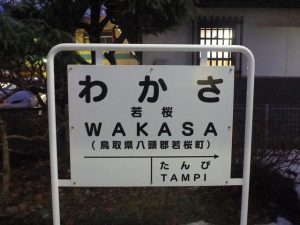
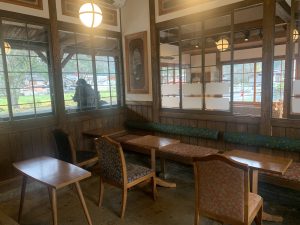
Wakasa Station itself is worth the trip. The terminus is a restored wooden building with preserved rolling stock on display and a small café inside. Even if you’re not a railway enthusiast, it’s the kind of place that feels worth photographing.
Picking Up Wakasa Railway Curry
Looking for an edible souvenir? Wakasa Railway Curry is sold online and has also appeared at Shosen Grande in Akihabara, Tokyo. It’s a retort pouch curry with local beef and a hidden persimmon purée, packaged in a box designed to look like the railway’s retro cars. Not cheap at ¥2,160, but part of the proceeds support the line.
Useful Links
Wakasa Railway Official Website
Timetable and Service Updates
One-Day Pass Information