
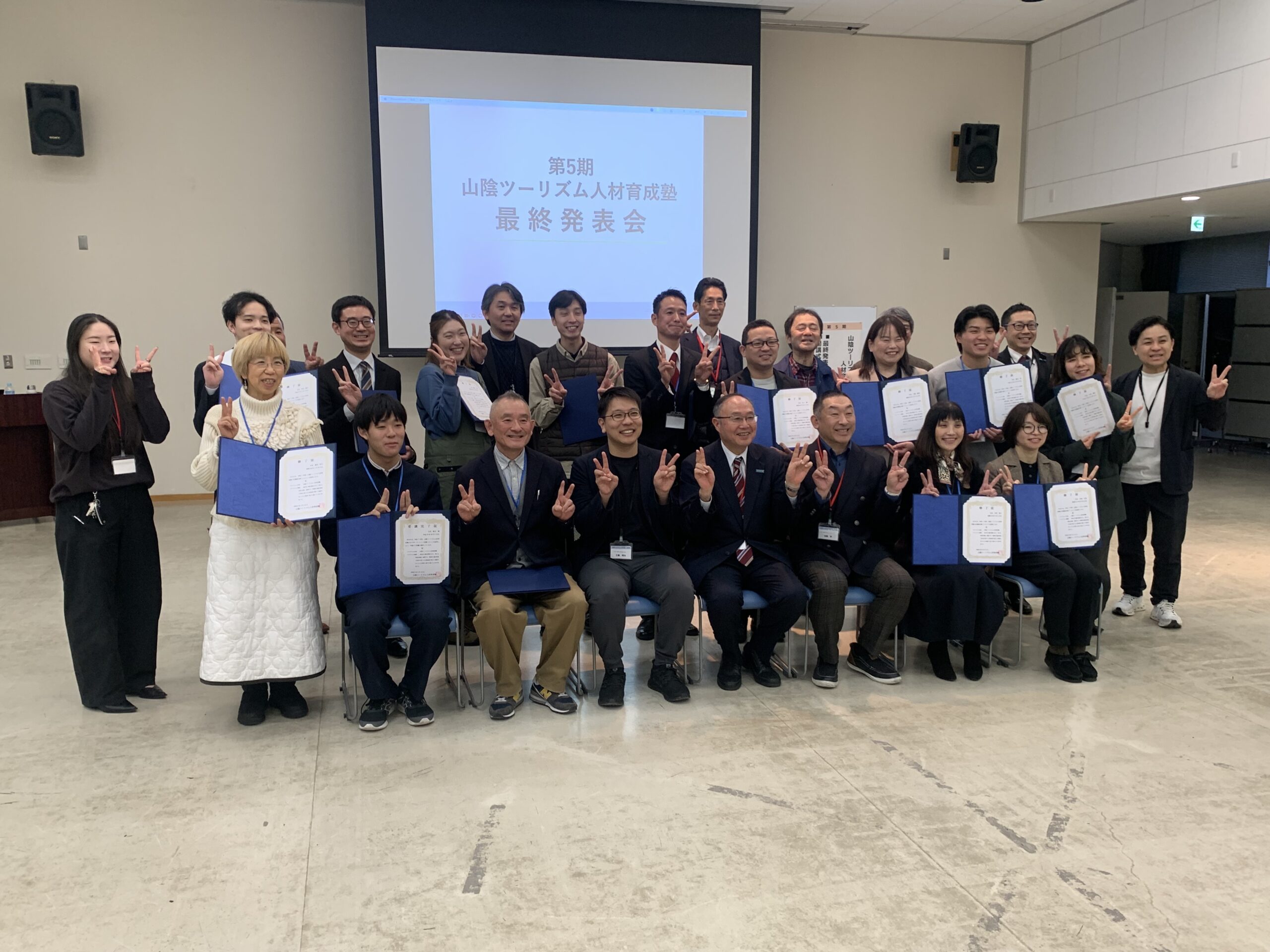
Shimane University — A presentation event for the Sanin Tourism Human Resource Development Programme, organised by the Sanin Inbound Organisation, was held at Shimane University on Friday. A total of 16 participants from Tottori and Shimane prefectures presented tourism business plans to representatives of local governments, universities and financial institutions.
The Sanin region, in western Japan along the Sea of Japan coast, consists of Tottori and Shimane prefectures. The two prefectures have been working to strengthen tourism as part of broader regional development efforts.
Rinko Omae, from the Matsuzaki district of Yurihama, Tottori Prefecture, introduced initiatives at Y Pub & Hostel Tami, where she serves as manager. She described tourism as “an opportunity for self-reflection” and said she aims to strengthen the community by fostering ties between travellers and local residents.
Yu Funaki, a fourth-year student at Hosei University from Mikuriya in Daisen, Tottori Prefecture, said he came to appreciate his hometown after moving to Tokyo. He said he hopes to attract young people from the Tokyo metropolitan area for study-based stays in the future.
On the Shimane side, a presenter from Matsue proposed a “unified branding” strategy that integrates the city’s tourism resources under a single concept. The plan seeks to redefine previously disparate local attractions—including the castle, the city’s waterways, tea culture and writer Lafcadio Hearn—to enhance the overall value of the city.
Koji Noguchi, a participant in last year’s programme, noted that he saw a shared wellness theme among female presenters, including healing. He added that he hopes to see this year’s plans implemented.
According to the Sanin Inbound Organisation, inbound overnight stays were up 9.3 per cent year on year nationwide, rising 71.5 per cent in Tottori Prefecture and 29.3 per cent in Shimane Prefecture.
Now in its fifth year, the programme is run by Shimane University and Tottori College in collaboration with the Sanin Inbound Organisation. It aims to cultivate tourism professionals who can connect regional stakeholders and develop tourism businesses utilising local resources. Support is provided through the implementation stage.
ーWord by Takashi Saito